Gravel Filter Working Principle and Application Areas
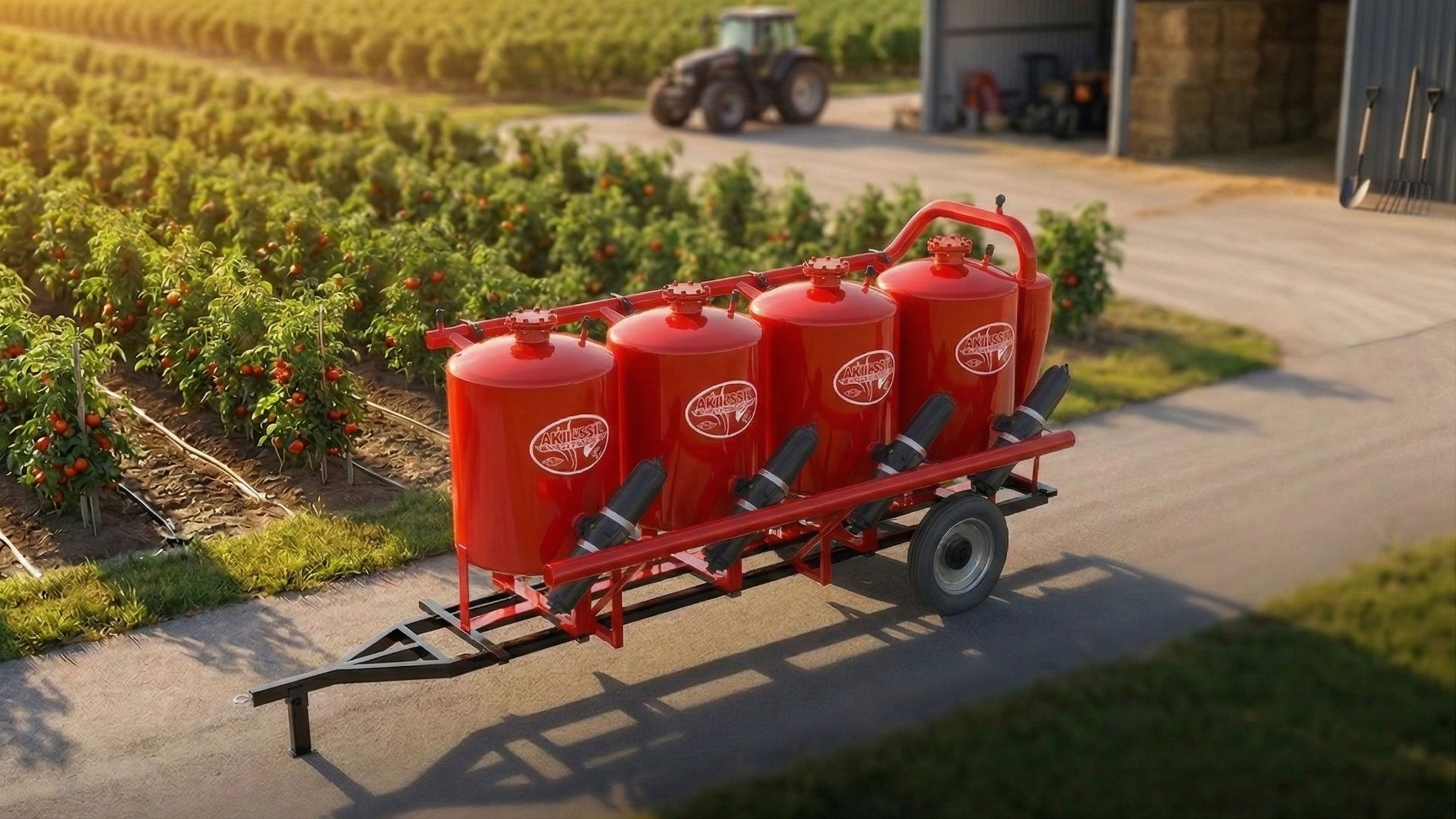
Water sources such as lakes, dams, canals, and ponds are commonly used for irrigation. However, such water sources often contain risks like algae and other organic contaminants. For this reason, using a gravel filter during the filtration process provides the most efficient solution.
Gravel filters are designed to filter water containing organic matter such as algae and provide high-performance filtration efficiency. Due to their ability to perform rapid and deep filtration, they offer one of the best filtration options available.
If you use water from lakes, dams, or canals for agricultural irrigation, integrating a gravel filter into your system will help improve efficiency and enhance the overall performance of your irrigation process.
Structure and Working Principle of Gravel Filters
Gravel filters consist of two chambers. In the upper chamber, materials such as quartz sand, basalt, sand-gravel mixtures, anthracite coal, silica sand, and marble chips are used—these determine the filtration grade. These materials are responsible for performing deep filtration.
The upper and lower chambers are separated by a diffuser plate, also known as a mushroom plate. This diffuser prevents the filtration media in the upper chamber from moving into the lower chamber and also enables efficient backwashing.
During backwashing, the diffuser distributes pressure evenly across the media layer, ensuring that the cleaning process is both uniform and effective. The lower chamber functions as a collector for the filtered clean water.
The inlet/outlet diameters of gravel filters typically range from 2” to 4”, and their capacity varies between 10 m³/h and 110 m³/h. Depending on the flow rate of the water, gravel filters can be manufactured to perform manual, semi-automatic, or fully automatic backwashing operations.
When water enters the system, it flows slowly through the filtration materials in the upper chamber according to the desired filtration level. These materials trap the suspended particles found in the contaminated water. Clean water then passes through the diffuser section and exits the system through the outlet.Over time, particles accumulated in the upper layer cause pressure loss and clogging within the filter. When this occurs, the backwashing process must be initiated using clean water. The process starts by closing the inlet valve (manual or automatic) and opening the drainage valve. The backwash duration should be adjusted according to the level of clogging observed.
During backwashing, pressurized clean water from the lower chamber moves upward through the diffuser, loosening and lifting the trapped particles within the filter media. These particles are then discharged through the drain outlet of the backwash control valve.
In bypass systems, the backwashing process takes place in two stages, initiated by closing valves 2, 4, and 5. For optimal backwashing performance, it is strongly recommended to install a disc or screen filter at the outlet of the gravel filter.
Application Areas of Gravel Filters
Gravel filters are an important component of drip irrigation systems, particularly when water from lakes, rivers, dams, canals, or ponds is used. They provide an effective solution for removing foreign substances such as algae and other organic impurities in agricultural irrigation.
Through their high efficiency and reliability, gravel filters offer a successful and durable solution for maintaining clean water in irrigation systems.